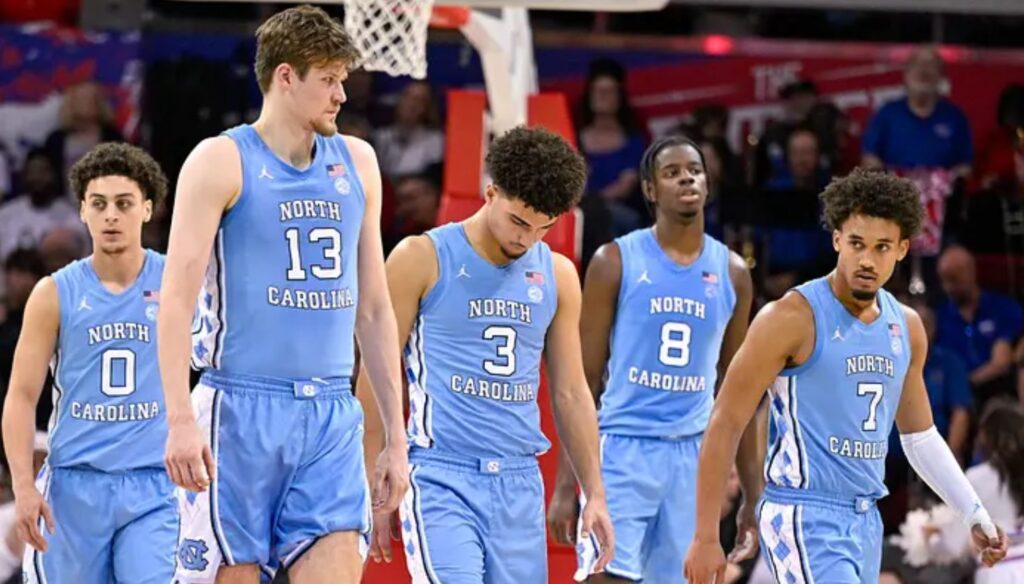
With college basketball now firmly entrenched in the NIL and transfer portal era, fans have gained a new offseason debate: how much is a roster actually worth based on what a school has spent to assemble it? The concept itself isn’t exactly new, as NBA and MLB fans have long evaluated teams through the lens of payroll and spending. However, applying that same approach to college basketball is still relatively new—and, for many fans, a somewhat frustrating reality of the modern game. That conversation resurfaced again yesterday after reports revealed that North Carolina invested more than $20 million to build its 2026-27 roster.
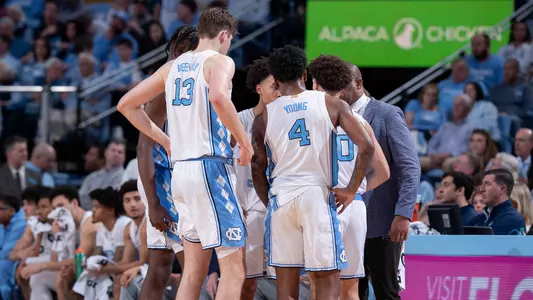
It was widely expected that UNC would increase its investment in basketball after hiring Michael Malone, so the reported price tag of the roster doesn’t come as much of a shock. During the offseason, Malone moved aggressively to reshape the team, bringing in players such as Matt Able, Terrence, Neoklis Avdalas, Alexandros Samodurov, and Sayon Keita after the roster was essentially torn apart following the 2025-26 season.
On paper, Malone appears to have done a solid job putting the roster together, and many of the moves seem calculated and purposeful. But on the internet? That’s a completely different story.
Once the $20 million figure became public, fans of rival programs—and plenty of other people online—wasted little time taking shots at UNC’s roster and questioning whether the spending was justified. Here are a few examples:
There’s certainly no shortage of trolling and premature takes surrounding UNC’s roster, but it’s fair to question whether some people truly understand what it takes financially to compete in today’s college basketball environment. Reports indicate that serious contenders are spending at least $20 million on their rosters, while some programs are pushing closer to the $30 million mark.
Given that reality, it’s strange to see people passing judgment on a team that hasn’t even played a meaningful game yet. It’s even more premature when you consider that this roster was assembled during Michael Malone’s first season at UNC. The coaching staff hasn’t had the opportunity to see how these players perform together in actual competition.
Still, this is the internet, where apparently everyone needs to have an opinion before the season even begins.
My honest assessment is that UNC’s willingness to invest more than $20 million in its roster is a clear sign that the program is serious about keeping pace with the rapidly changing college basketball landscape. That doesn’t mean the Tar Heels will get everything right every season. No program does. Kentucky was perhaps the clearest example of that last season, and I’d argue Duke falls into a similar conversation. The Blue Devils have consistently put together talented rosters, but they still haven’t been able to turn that talent into a national championship—which, depending on the argument, is supposedly the only thing that matters to them.
It’s also important to remember that schools don’t necessarily have to disclose completely accurate figures when it comes to what they are spending on their rosters. So while UNC’s reported $20-plus million price tag may sound enormous, there’s a good chance other major programs are spending considerably more behind the scenes.
That brings us to the bigger question: What is the right way to evaluate UNC’s $20-plus million roster?
Let’s assume the Tar Heels are one of 10 programs spending at least $20 million on their players. Only four teams can reach the Final Four, and ultimately, just one can win the national championship. So what should the standard actually be?
Should we judge individual player performance? Overall team chemistry? Depth and roster construction? The coaching staff’s ability to maximize the talent? There are plenty of legitimate factors that could determine whether UNC gets a good return on its investment.
What shouldn’t be the only measuring stick is simply “vibes,” preseason bias, or the eye test. How can anyone accurately judge a roster that hasn’t played a meaningful game together? At this point, we haven’t even seen how these players fit within Malone’s system or how they respond when the stakes become real.
There has to be a more meaningful way to evaluate the value of a modern college basketball roster than simply looking at the price tag and deciding whether we like the players on paper.
So, what do you think? How should we measure the value of UNC’s $20-plus million roster? Let us know in the comments.
One thing seems almost certain, though: as college basketball continues to move deeper into the NIL and transfer-portal era, the amount programs spend to remain competitive is probably only going to keep climbing.