The Philadelphia Phillies were expected to compete for another deep postseason run in 2026. Instead, a disastrous start forced the organization to make one of its biggest decisions of the season.
The Phillies fired manager Rob Thomson after the club stumbled to a 9-19 record, leaving Philadelphia tied for the worst record in Major League Baseball at the time. The move came just 28 games into the season and marked a stunning end to Thomson’s tenure.
Thomson had previously established himself as one of the most successful managers in Phillies history. He guided Philadelphia to four consecutive postseason appearances, including the 2022 National League pennant, and entered the 2026 season with a .568 winning percentage — the highest among the franchise’s full-time managers in more than a century.
But the organization’s expectations were much higher.
With a payroll exceeding $300 million, Philadelphia believed it had assembled a roster capable of competing for a championship. Instead, the club struggled across multiple areas, forcing president of baseball operations Dave Dombrowski and his front office to reassess the situation.
Dombrowski ultimately decided that a change in leadership was necessary.
“This time was the right time to get a different voice,” Dombrowski said after dismissing Thomson.
Roster Problems Also Under Scrutiny
The Phillies’ problems were not limited to the manager.
The organization was also dealing with concerns about its roster construction and a lack of production from several key offensive positions. Dombrowski acknowledged that Philadelphia had struggled to find consistent production in the middle of its lineup.
The club had even turned to rookie Felix Reyes in the cleanup spot early in the season, illustrating how serious the offensive problems had become.
That created an uncomfortable situation for Thomson, who ultimately became the person held responsible for a team that was failing to perform at the level expected of it.
Phillies stars Bryce Harper and J.T. Realmuto both acknowledged that the players also deserved responsibility for the poor start. Harper noted that somebody ultimately had to take the fall, while Realmuto said it was frustrating that a manager had to lose his job when the players were the ones struggling on the field.
Don Mattingly Takes Over
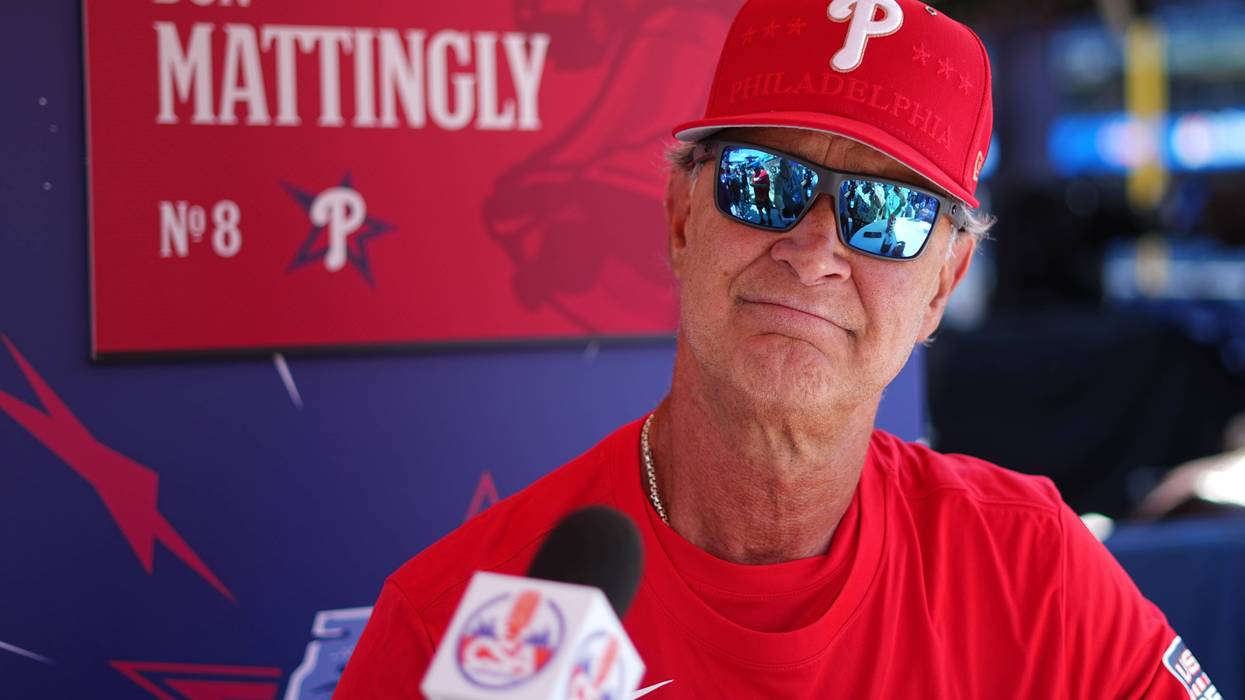
Philadelphia immediately turned to bench coach Don Mattingly, naming him interim manager for the remainder of the season.
Mattingly had initially expressed little interest in returning to a managerial role, but accepted the opportunity after Dombrowski approached him.
The change immediately gave the Phillies a different voice in the clubhouse.
Philadelphia responded with a 7-0 victory over the San Francisco Giants in Mattingly’s first game as interim manager, providing the organization with an early sign that the change could help stabilize the team.
The decision ultimately represented more than a simple managerial change. It was a warning that the Phillies’ championship window could not afford another season of underachievement.

Phillies Turn the Page
Despite the ugly beginning, Philadelphia’s season did not remain defined by that early collapse.
The Phillies have since rebounded and, as of late August, are playing some of their best baseball of the season. Philadelphia recently swept the Los Angeles Angels, winning 13 of its last 15 games while continuing to strengthen its postseason position.
That turnaround makes the decision to fire Thomson even more complicated.
The organization clearly believed something had to change, and Mattingly has helped provide the stability Philadelphia needed.
Now, however, another major question awaits: whether Mattingly has done enough to convince the Phillies that he should remain in charge beyond 2026.
For an organization built to win immediately, the pressure will remain enormous. The Phillies have already shown that poor results can lead to dramatic decisions — and another disappointing finish could bring even more changes.